
AI-Powered Intelligent Scheduling Platform
Enhancing ‘Workforce Efficiency’ to Help Stores Reduce Costs and Boost Productivity
LABOUR MANGE TOOLS
Intelligent Scheduling Tool for Stores
AI-Driven Revenue Predictive Model
This is the key to upgrading hourly scheduling from “experience-driven” to “data-driven.” By integrating multi-source data through AI technologies such as Time Series Forecasting Models, it delivers accurate predictions for future product/service demand and revenue.
Intelligent Scheduling
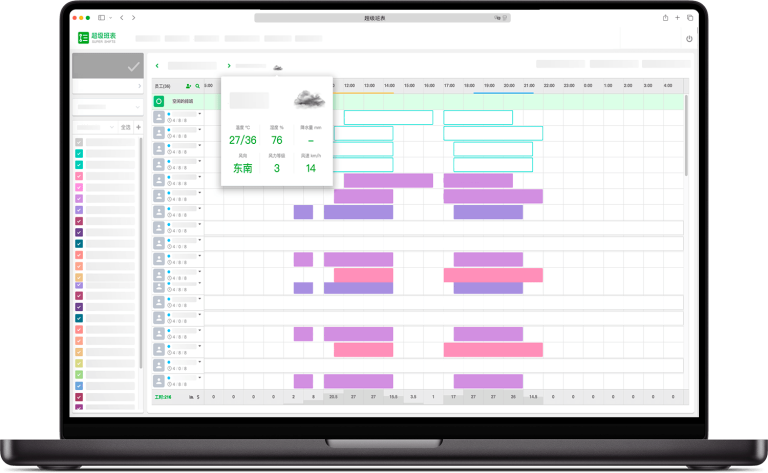
Automatically generates optimal schedules based on Predicted Business Demand, Staff Constraints, Rule Constraints, and Cost Objectives. Supports dynamic adjustments, conflict warnings, and compliance checks. Upgrades from “experience-driven, manual error correction” to “data-driven, algorithm-optimized.”
Cross-Role & Skill Management
Quantifies and grades employees’ capabilities across different roles/tasks. Enables intelligent work assignment based on Cross-role Capabilities and Skill Levels, combined with AI algorithms and refined personnel competency models. Achieves dynamic allocation through “precise role matching, flexible cross-role scheduling, and skill-graded empowerment.”
Employee Shift Preferences
& Work Availability
Employees can submit personal availability, shift preferences, suitable roles based on skills, minimum/maximum working hours, leave/swap requests, and willingness to cover shifts via self-service channels. Achieves two-way matching between business needs and employee preferences.
Cross-Store Support
When a store (requesting store) faces staff shortages due to peak traffic or employee leave, other stores (supporting stores) can temporarily deploy employees with cross-role skills to assist, supplementing manpower for specified shifts/tasks. This enables flexible internal human resource scheduling and capability sharing.
Cross-Store New Employee Training
During new store preparation phase, stores with mature skills (training stores) conduct skill training for employees from other stores (trainee stores), or arrange for trainees to gain practical experience at the training store. This optimizes training costs, ensures standardized skill transfer, maintains consistent service standards across stores, and improves service quality.
Attendance System Integration
Widely compatible with attendance devices from various manufacturers and supports DingTalk, WeChat Work, and Feishu clock‑in. Connects seamlessly with attendance systems to enable automatic data synchronization, eliminating duplicate manual entries. Automatically compares scheduling data with clock‑in records to generate attendance and working‑hour reports.
Schedule Scoring & Diagnostics
Quantitatively evaluates schedule plans based on preset dimensions (e.g., compliance, cost, efficiency, satisfaction) with a clear score (e.g., 0–100) to visually reflect schedule quality. Diagnoses low‑scoring dimensions using big‑data analysis to identify root causes (e.g., low compliance score → overtime hours exceeded; low satisfaction score → insufficient preference matching) and provides actionable optimization suggestions.
Productivity Analysis & Workforce Efficiency Management
Automatically analyzes and visualizes current performance, sets ‘workforce‑efficiency’ targets, and tracks progress against key process indicators. Continuously monitors fluctuations in process metrics, forecasts achievement of efficiency goals, and enables timely intervention. Through intelligent “target breakdown + process monitoring,” it maximizes the value of store workforce allocation.